Saturday, March 30, 2024
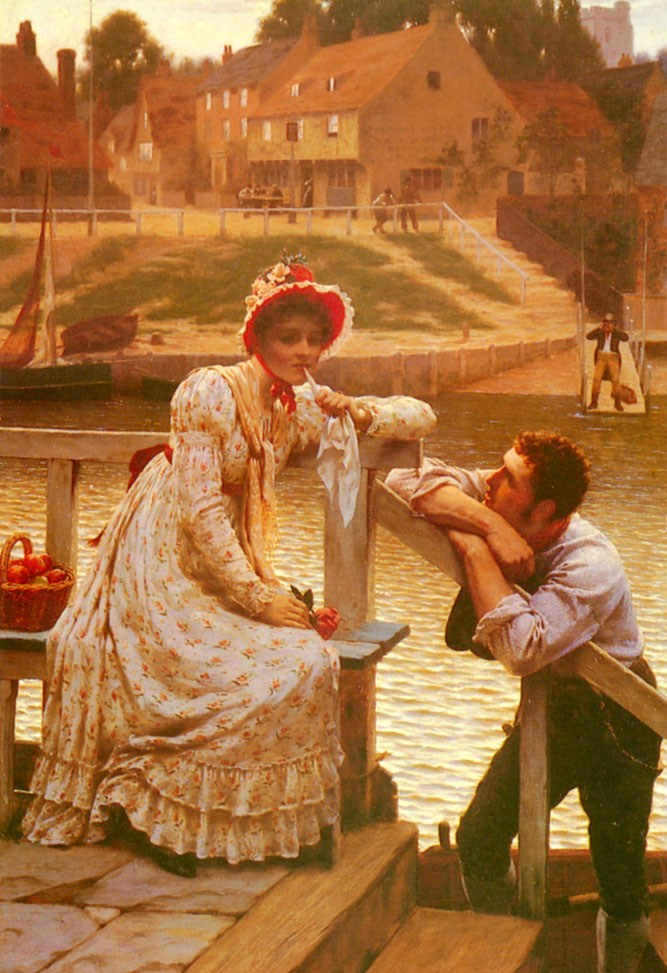
Above, two chuckaboos? Or perhaps something more?
Welcome, my chuckaboos! The vintage of choice today is Victorian. Some of you will remember from my posts (years ago) that “chuckaboo” was slang in that era for a dear friend.
Those with great recall will notice that I posted this two years ago. Sorry for the shortcut. I’m trying (yet again) to finalize The Delta Pearl: A Steampunk Riverboat. Don’t worry, I’m not about to say that it’s “coming soon” because I’ve made a liar of myself too many times with that.
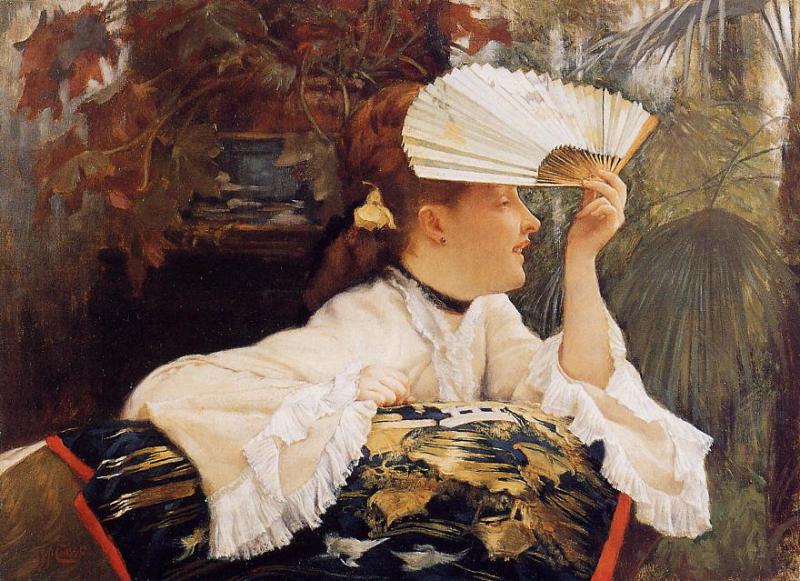
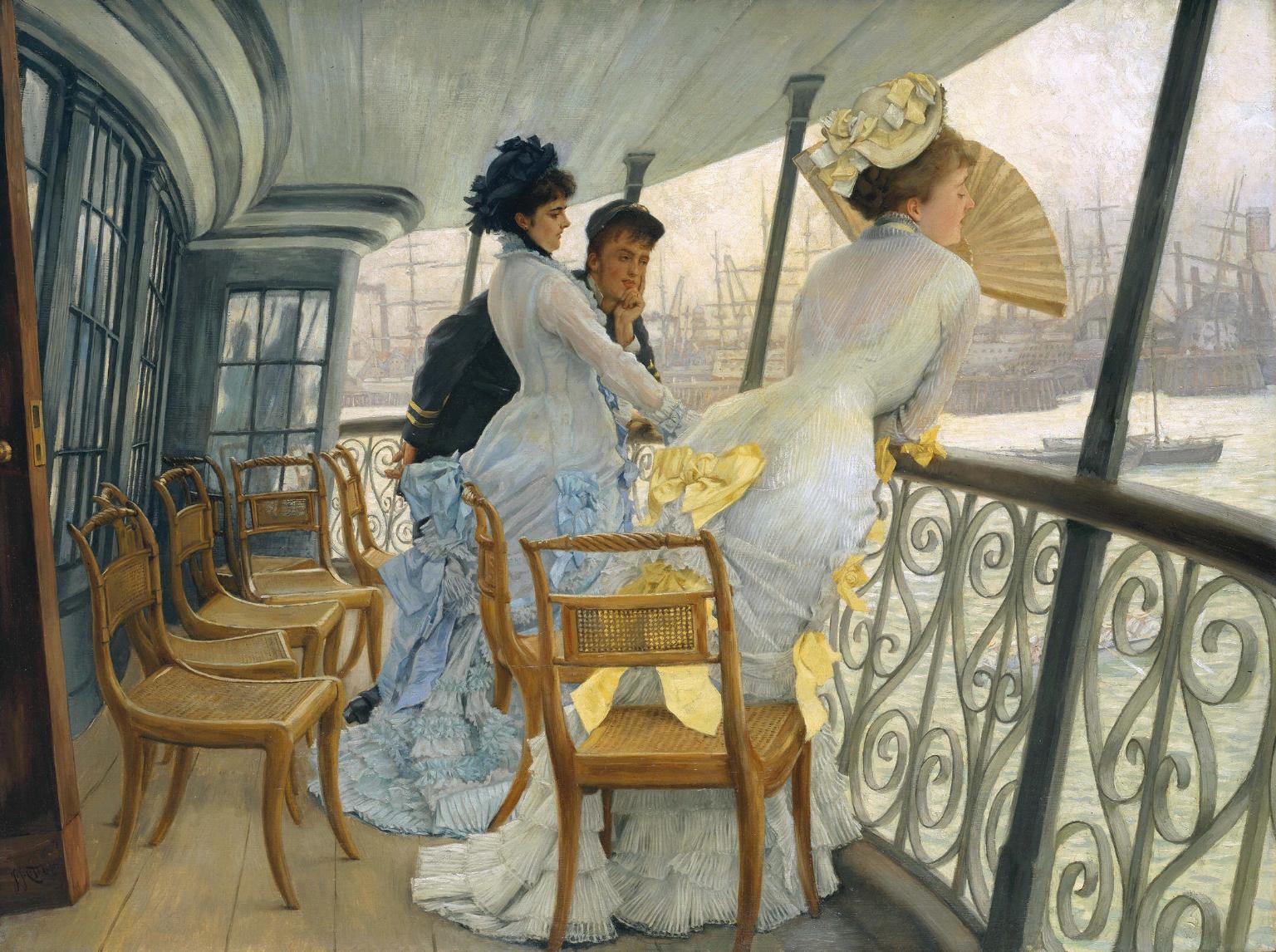
Today I’m posting selections from the letter “A” section from my slang dictionary, “Speak Chuckaboo, Slang of the Victorian and Steam Eras.” Maybe you romance lovers can guess what “amorous congress” means. You might want to get your fan ready… Although I doubt anyone will guess what “ammunitons” were!
A lick and a promise: To do something haphazardly. “He only gave it a lick and a promise.”
Abaddon: A thief who informs on his fellow rogues. It comes from the Hebrew Abaddon, a destroyer. 1810-1880.
Abbess: A woman who runs a house of prostitution. A brothel madam.
Abbot: The husband, or preferred man of an abbess.
Abligurition: Pronounced ah-blig-yoo-RISH-uhn. The act of spending excessive amounts of money on fine foods.
Ab-natural: Supernatural.
Abnegate: To retract, deny, recant, or relinquish — usually emphatically.
Absquatulate: To take leave, to disappear. “A can of oysters was discovered in our office by a friend, and he absquatulated with it, and left us with our mouths watering.” 1843.
Ace-high: First class, respected.
According to Hoyle: Correct, by the book.
Acknowledge the corn: To admit the truth, to confess; to acknowledge one’s own obvious lie or shortcoming. “Jim acknowledged the corn, and said that he was drunk.” 1840.
Ack-ruffians: Rogues who in conjunction with watermen sometimes rob and murder on the water. Also, ack pirates.
Admiral of the red: A person whose very red face evinces a fondness for strong liquor.
Aeronef: A heavier than air flying machine, an airplane or gyrocopter.
Aerostat: A lighter than air vehicle or craft, a hot air balloon or a dirigible.
Afternoonified: A society word meaning smart or posh. “The food is not afternoonified enough for me.”
Agony of bliss: An orgasm.
Alienist: A physician specializing in treating mental disorders, a psychiatrist.
All creation: Everything or everybody. Also, all nature, or all wrath.
All-fired: The same as hell-fired. “In my opinion, Don Jones would make an all-fired good deacon.” 1852.
All on one stick: A conglomeration or combination. “He kept a kind of hotel and grocery store, all on one stick, as we say.” 1830.
All-overish: Neither sick nor well, uncomfortable. The premonitory symptoms of illness. Also, the feeling which comes over a man at a critical moment, say just when he is about to “pop the question.” Sometimes this is called, “feeling all-over alike, and touching nowhere.”
All possessed: Like someone or something possessed by the devil.
All to pieces: Completely; absolutely. “I know him all to pieces,” Tim said.
Almighty: Huge. “I felt almighty sad.” 1848.
Amalgamation: The mixing of blacks and whites.
Amorous congress: To engage in amorous congress is to have sex.
Ammunitions: Boots..
Anglewitch: Anything used as fishing bait, particularly worms.
Anointing: A good beating. Also, when salve is applied to an injury.
Anti-fogmatic: Raw rum or whiskey.
Ape Leader: An old maid.
Apple Lady: Hard cider. USA 1860s.
Arbor vitae: A phallus, penis.
Arfarfan’arf: A figure of speech used to describe drunken men. “He’s very arf-arf-an’arf,” meaning he has had many “arfs,” or half-pints of booze.
Arkansas toothpick: A long knife. Also known as a California or Missouri toothpick.
♥ ♥ ♥
This volume contains slang from the Victorian Era, as well as the Steam Era, which began before the reign of Queen Victoria, and continued into the early 1900s. It combines language from the Victorian, Edwardian, and Steam Eras because there was a great deal of overlap.
This slang dictionary also contains a sprinkling of vocabulary words of those eras, which have fallen out of use, along with some history and trivia. Have fun speaking chuckaboo. You’re positively rum ti tum with the chill off! Simply hunky dory.
Universal Purchase Links
Kindle: relinks.me/B0B9W38LDJ
Paperback: relinks.me/B0B9T8MP1K
♥ ♥ ♥
Thanks for visiting. It’s all beer and skittles when you’re here. Friendly comments are encouraged. Hugs!
Copyright © 2022 by Teagan Ríordáin Geneviene
All rights reserved.
No part of this work may be reproduced, scanned, or distributed in any printed or electronic form without permission. Please do not participate in or encourage piracy of copyrighted materials in violation of the author’s rights.
All images are either the property of the author or provided by free sources, unless stated otherwise.
…


Interesting slang. Fun ways to say things, they sure got creative! Ace high post, for sure. Thanks for sharing!
LikeLiked by 2 people
Thanks. I’m glad you enjoyed it — and that’s just the A list. Hugs.
LikeLiked by 1 person
some very strange words indeed; a few like ‘abnegate’ are still in use; I knew ‘amorous congress’ but was unaware of ‘agony of bliss’ or ‘arbor vitae’ 🙂
LikeLiked by 2 people
I think the longest list in my dictionary is for the letter B. Thanks for visiting. Hugs.
LikeLiked by 1 person
Thank you for teaching me some new words chuckaboo 🙂
LikeLiked by 3 people
It’s always a pleasure to see you, Tandy — you’re absolutely ace-high, my chuckaboo. Hugs.
LikeLiked by 1 person
This was a lovely and informative post, Teagan. I thoroughly enjoyed it. In fact, all cities around the world have slangs that evolve from local culture, traditions and many other social factors. Mumbai has its own slang terms. For instance, we say – Chal, hawa aane de which literally means let the cool breeze in. However, it actually means Get Lost or Get Aside (indicating that the person in front of you is blocking the air).
LikeLiked by 3 people
“Let the cool breeze in” — I like that better than the similar one from where I grew up. It was “Don’t let the door hit your a$$ on your way out.” (So, not just “get lost” but get lost fast.)
Thanks for reading and commenting, Sharukh. Have a brilliant new week. Hugs.
LikeLiked by 1 person
I will affirm with others that “a link and a promise” is still in use. I do like the sound of all-overish. (K)
LikeLiked by 3 people
Hi, Kerfe. Yes, all-overish is a great catchall word when we’re just not feeling 100%. Hugs.
LikeLiked by 1 person
‘A lick and a promise’ was widely used in London for a quick wash when in a hurry. My mum would say, “We are going to be late, so you will have to settle for a lick and a promise, no time for a bath”. I still say it now. In fact, I mentioned it in relation to our grandson just after Chrsitmas.
Best wishes, Pete. x
LikeLiked by 4 people
My mother used to say “a lick and a promise,” and so do I.
LikeLiked by 2 people
Hi, Pete. That’s a good one. I do recall hearing it on movies. Keep spreading the vintage slang! 😀 Hugs.
LikeLike
I love these fun words. Have a great weekend my chuckaboo!!
LikeLiked by 2 people
It’s great of you to read and comment, Darlene. You’re simply rum ti tum with the chill off! 🙂
LikeLiked by 1 person
That’s an impressive list of Victorian letter slang. Very clever those Victorians were. No one would call someone an “Arbor vitae” instead of a “dick” these days.
LikeLiked by 2 people
Slang was so much more fun then (and in the 1920s) than it is today, Tim. Some of the non-slang vocabulary words that have fallen out of use are too. Thanks for reading and commenting. Hugs.
LikeLiked by 1 person
Political correctness has killed creative slang and left us with uncreative, brazen expletives.
LikeLiked by 1 person
People do choose to be offended by the most surprising words…
LikeLiked by 1 person
Hi, Teagan! I loved seeing the pictures and learning the slang words. 🧡🏵️🐈 Hugs
LikeLiked by 3 people
I’m delighted that you had a fun visit here, my chuckaboo! Hugs.
LikeLiked by 1 person
These are great. Funny thing. My family is from the back woods and still uses some of these. WOW! 🤣😎🙃
LikeLiked by 3 people
Several people have said similar things. I was raised by hillbillies, but I don’t recall hearing any of these before I started research. Language is such a regional thing. Hugs.
LikeLiked by 1 person
Really, really interesting, Teagan – especially the terms dealing with sex. Prudes, these people were. Lots of words I didn’t know and some that I actually use! Great post!
LikeLiked by 2 people
Oh, Noelle, they were so full of contrasts. Prudish to the point of creating “skirts” (which we still see in some styles) for furniture so the legs weren’t exposed! They were appalled at even the mention of legs or anything related. For instance, they wouldn’t even say “trousers” because they were too close to legs — one alternative was inexpressibles. And yet, in some ways, they could be remarkably tolerant. Thanks for reading and commenting. Hugs.
LikeLike
So interesting. I think I would not have been happy living then!
LikeLiked by 1 person
love these !
LikeLiked by 2 people
I’m happy you enjoyed this post, Beth. Thanks for reading and commenting. Hugs.
LikeLiked by 1 person
I remember the generalities but it was so much fun reading the A list again. These would be great words to bring back if we could get a number of folks involved in using them. 😁
LikeLiked by 1 person
Indeed they would, my chuckaboo! This slang gives me a giggle mug, unlike the beef-headed stuff of today. It’s just plain vazey. 😉 Have a wonderful weekend, John. Hugs.
LikeLiked by 1 person
Thank you, Teagan. I hope you have a wonderful weekend as well.
LikeLiked by 1 person
This was fun!
LikeLiked by 2 people
My face is a giggle mug from your comment, my chuckaboo. Hugs.
LikeLiked by 1 person
😍
LikeLiked by 1 person
These are so fun to read and know. We still use some of these today, too. I had to laugh at some, and especially liked ‘afternoonified’! haha 🙂
LikeLiked by 3 people
Afternoonified is one of my favorites, Barbara. Anothe favorite is “inexpressibles” for trousers. Thanks for reading and commenting. Hugs.
LikeLiked by 1 person
Teagan, I’m running out of great adjectives for you!!
LikeLiked by 2 people
Well dash my wig, GP, you’re just so all-fired nice. You’re absolutely rum ti tum with the chill off. 😉 Hugs.
LikeLiked by 1 person
hahaha, now I’m speechless!!
LikeLiked by 1 person
This book, and Speak Flapper are within arm’s reach of my desk, Teagan. I enjoy looking through them and I have found both of them helpful at times while writing.
LikeLiked by 3 people
Dang it, I just lost my slang-filled comment.
Dan, that’s about the greatest thing anybody could say to me. Big hugs.
LikeLiked by 1 person
Interesting that some of these are still in use. Others, I never would have guessed what they meant.
LikeLiked by 1 person
Sometimes I think they must have been mind-readers, Liz. Haha. Although context makes all the difference. Hugs.
LikeLiked by 1 person
Good point about context!
LikeLiked by 1 person
Fascinating! Love the anti-fogmatic!
LikeLiked by 3 people
Haha. That’s a good one. I like arfarfan’arf too… to which the anti-fogmatic leads. 😀 Thanks for visiting, my chuckaboo. Hugs.
LikeLiked by 1 person
I really enjoyed learning these terms, as most of them were new to me. Obscure words and phrases can be so interesting. And these are only the A’s of Victorian slang!
LikeLiked by 2 people
I’m happy you liked it, Dave. People keep saying they actually use some of them. Although, I wasn’t familiar with them before I started researching. Haha — yes, that’s only the A list. They had more words for sex and body parts than I ever imagined. I was actually afraid KDP might kick the book back to me as obscene. Hugs.
Hugs.
LikeLiked by 1 person
I am with Robbie. I love the slang and the images as well. As I live in Barcelona now, I’m unlikely to be able to use then in conversation, but they’re a treasure. Thanks, Teagan and love to Daphne and Velma.
LikeLiked by 3 people
Thanks, Olga. The Scoobies send you loud purrs. Big hugs to you, my chuckaboo!
LikeLike
An excellent collection of words!
LikeLiked by 3 people
Welcome, Sarah! I’m glad you enjoyed these — and that’s only the A list. Thanks for reading and commenting. Hugs.
LikeLiked by 1 person
Hi Teagan, this is a lovely post. I enjoyed the slang and love the pictures. Have a good long weekend.
LikeLiked by 3 people
I’m happy you had a good visit here, my chuckaboo. A very happy weekend to you too. Hugs.
LikeLike
🌞💞
LikeLiked by 1 person