Wednesday, August 14, 2024Teagan via PlaygroundHow do you feel about a few non-fiction, history-related posts? It’s not quite my usual brand of whimsy, but I promise they’ll be at least unexpected or unusual in some way. I’ve been working hard to finish up “Real Steampunkery Tech: True Contraptions of the Steam and Diesel Eras,” so my head is in that kind of space.This year I’ve been learning about a lot of women who were overlooked by history, and women inventors of past eras. Today I’m sharing about “human computers” and yes, they were most often women. Women continue to fight for equality and that includes in Silicon Valley — and yet, their math skills helped launch the digital age.Computers weren’t always made of circuits or motherboards. At one time, they were human. Before the digital age emerged, computers were humans, sitting at tables and laboriously doing calculations by hand. One group in the 1800s was comprised of boys as young as 15 years old.By the late 19th century, some scientists realized that hiring women could reduce the cost of computation. Isn’t it always about cheap female labor…Since the late 1900s the term has been applied to individuals or teams of people with prodigious powers of mental arithmetic. (Sometimes called mental calculators.) English mathematician Alan Turing described the human computer as someone who is “supposed to be following fixed rules; he has no authority to deviate from them in any detail.”The Harvard Computers standing in front of Building C at the Harvard College Observatory, 1913. WikipediaThe Harvard Computers were a team of skilled women working to process astronomical data at the Harvard College Observatory in Cambridge, Massachusetts, United States. The team was directed by Edward Charles Pickering (1877 to 1919) and, following his death in 1919, by Annie Jump Cannon.The women were challenged to make sense of astronomical patterns created a system for sorting the stars into categories. Annie Jump Cannon’s success at this activity made her famous in her own lifetime, and she produced a stellar classification system that is still in use today. Antonia Maury discerned in the spectra a way to assess the relative sizes of stars, and Henrietta Leavitt showed how the cyclic changes of certain variable stars could serve as distance markers in space.Human computer with her IBM 704 in 1959 at NASA, Wikimedia CommonsAt the National Aeronautics and Space Administration’s (NASA) Jet Propulsion Laboratory in the USA, human computers were a talented team of women. Over time, these women performed hundreds of thousands of mathematical calculations crucial to the U.S. space program. They also went on to become some of the earliest computer programmers.
♣ ♣ ♣
Coming Soon!
As I mentioned last week, I’ll soon add another volume to my Author Tool Chestcollection. It’s a summary overview of unexpected, odd, and downright freakish inventions of bygone days. Also, a little further down the line is Speak Daddy-O: Slang of the 1950s.
Real Steampunkery Tech:
True Contraptions of the Steam and Diesel Eras
♣ ♣ ♣
Thanks for taking a step into a bygone era with me. Friendly comments are encouraged. Hugs!
No part of this work may be reproduced, scanned, or distributed in any printed or electronic form without permission. Please do not participate in or encourage piracy of copyrighted materials in violation of the author’s rights.
All images are either the property of the author, or used with permission, or from free sources.
Ain’t that the truth, Teri. The thing I find most annoying is how dismissively women inventors (and others, like this group) were treated. I’ve been in that spot too many times myself, and it infuriates me. Thanks for spending time here. Hugs.
Robbie, I can imagine the wheels turning in your head as you consider the potential lives of those women. 🙂 I know that your plate already “overfloweth” but if you start something from it, I hope you’ll let me know. I hope all is well in your world. Big hugs.
Now I’m also looking forward to the Daddy-o book — I was born in 1950, so I expect I’ll meet some old friends in those pages. lol Cool, man, I dig it the most!
Haha! It’s fun slang, Marian. I got a kick out of making examples to use the words in sentences. It was coming along nicely, but when I decided to go forward with the 2015 Cornelis Drebbel steampunk story, I temporarily shelved the 1950s slang, so the Stempunkery Tech book would come out near the steampunk story. Thank for your encouragement. Big hugs to you and the kitties.
Teagan, look forward to your new books! Women need to be recognized for their talents. And you are one of them in a writing career. Wonder if any of the women computers had supportive husbands? Or were most single and focused on brain work. I know we’ll get answers with your creative mind at work, with psycology in the details. 📚🎶 Christine
You are too kind, Christine. I blush. I’m sure some of the human computers had husbands who were supportive — provided they brought home money and kept the house clean and put 3 meals and snacks on the table, etc…. (Eye roll)
“Real Steampunkery Tech: True Contraptions of the Steam and Diesel Eras” is only an overview with summary descriptions. It doesn’t delve very far into the contraptions or inventors. Many thanks for visiting. Hugs.
Haha. Indeed it should, Noelle. I imagine that the structure and details of their work could have been similar to those required in code breaking. I had not thought of that. Thanks for reading and commenting. Hugs.
I appreciate your supportive comment, Colleen. I’ve been surprised at the scope of it — and that’s just with me accidentally stumbling upon it, not a “mission” to dig it up. I didn’t try to put all of them in my Steampunkery book, but I did manage to add several of them. Hugs.
Hi Deborah. The Bletchley Park miniseries was so intense. It was brilliant. My intention is to mostly use the unfamiliar ones. I’m glad you enjoyed this. It’s a rough week, but that’s just because I’m me. I don’t have the flu, and my house is not getting flooded. 🙂 Wishing you an easy coast down the other side of this midweek hump. Hugs.
Excellent post, Teagan. It’s too bad more women weren’t involved with the development of computer programming. Years ago, when Laurie was working with computers, a woman who worked with her and couldn’t make sense of the programming said, “This must have been designed by a man!”
Haha! I’ve heard that statement quite a few times myself, Tim. I’m happy you enjoyed this. I hope to do a few more about unknown (or little known) women inventors. Hugs to you and Lauire — and the kitties.
Thanks, GP. I don’t know the movie, but Sharukh also mentioned it. Unless you mean the Bletchley Circle series from BBC. I enjoyed that a lot. It would probably be too intense for me these days, but it’s a fantastic historical show. Hugs.
This is a wonderful post, Teagan. It’s long been a subject of interest of mine, both the human computer aspect and the number of women that were involved in that history. The list of accomplishments that relied on these women and their manual/mental efforts is as long as it is important. I am looking forward to your upcoming book, and the one after that. I hope you’re having a good week.
Thanks very much, Dan (and many thanks for sharing on social media). I barely grazed the highpoints here. What a great research project it would be.
It’s a very rough week, but that’s just because I’m me — not because of anything that’s actually horrible for a normal person. Thanks for thinking about me. Wishing you an easy coast down the other side of this midweek hump. Hugs.
Thanks for sharing, Pete — I really appreciate that. It’s good to see you.
I only grazed the highpoints here, but what a fabulous research project it would be to feature at least half a dozen of the women on that team.
I hope to do several more posts on little-known women inventors. Hugs.
This was a fascinating post. Yes, women have always been at the forefront but are often overshadowed by their male counterparts. I did my major in Sociology and “Women and Society” was one of my papers in which I scored highly. Often people ask Sarah what does she do? and when she replies that she is a housewife. We often get a response like – Oh! so you don’t work? This mentality is so absurd even from the ladies. Why do men/women think being a housewife is sitting at home? I have at times replied to such people – So, you think your mother never worked a day in her life? You’re what a cacti or something? Standing out in the sun, growing in the dirt even if no water is poured on you? Being a housewife is more work than men can ever imagine. I see Sarah work for hours as I work on my content. As a housewife a woman never gets paid, she works the whole day and sometimes never even gets a word of appreciation, let alone monetary gains. And when I take Sarah’s side I end up making an impression on their (my friends) wives. Then they say to me, Oh you’re quite a charmer. You know how to play with words. and I’m like – Really? (F disgusting) However, coming to this post, I loved it. I think there is also a movie called Hidden Figures on the topic you mentioned, am I right?
Hi, Sharukh. Your “cacti” remark made me laugh. That’s perfect. I’m happy that you stand up for Sarah. Earlier I toyed with the idea of starting an additional blog (one that would not have comments enabled) as something like Diaries of a Childless Cat Lady. Just to vent frustrations of a similar nature. But I need to focus on my books. I don’t think I can allow myself that luxury.
I’m sure you’re right about the movie — I don’t recall it, but the name sounds familiar. I don’t watch many movies. Have a great rest of the week. Hugs.
My cacti remark is very caustic and I have seem some weird facial reactions the momen I blurt it. However, those who ‘know me’ are aware of the fact that I use such uncanny terms when debating on certain issues. Initially, when I used to debate on FB, I used such terms and all I got in return was personal attacks and abuse. The other person felt humiliated and all he could do is curse. So, when I used to exit I use to tell them that I’m not angry about the cursing, but happy instead that I left them speechless.
It is a fascinating topic and it’s about time the women behind these projects get some recognition. They must never be forgotten. Thanks, Tegan, and we look forward to your new books!
Wow, I’m in love with this. How very fascinating! I love history about wonderful women. I’m kind of reminded of 1920 telephone operators, 40s engineers/builders during WWII, and the secretaries of the 1950s, and I’m here for it. We women have always had our hand in things. Even during the nomadic eras. Hunters weren’t what kept tribes alive. It was women! We were the cooks, cleaners, builders, and gatherers, and we ones who designed all the important tools that progressed us. We were the designers. What kept everyone alive while the men literally just brought back a little meat. We started agriculture, created tools that grew tribes, designed the wheel etc. Started trade and agriculture. We did it all from the beggining. 😄😁
Thanks very much, Samantha. I’m happy this resonated with you. I hope to do several more posts on little-known women inventors. (Well, this group weren’t exactly inventors, but the future posts will be.) The infuriating thing about some of the jobs you mentioned is how when women started doing the jobs, the pay and prestige both plummeted. Everything in recent centuries that began as an educated or technical job began as male dominated. When women started getting those jobs (usually because a war started), down it went. Telephone operators were men. So were secretaries, school teachers. I saw the same happening in technical writing when women like me started breaking into that field. As women were allowed to have those jobs, not only did the pay drop drastically, the work came to be seen as little more than “note taking” and all sorts of minor admin tasks were repeatedly dumped on us. Anyhow, many thanks for reading and commenting.


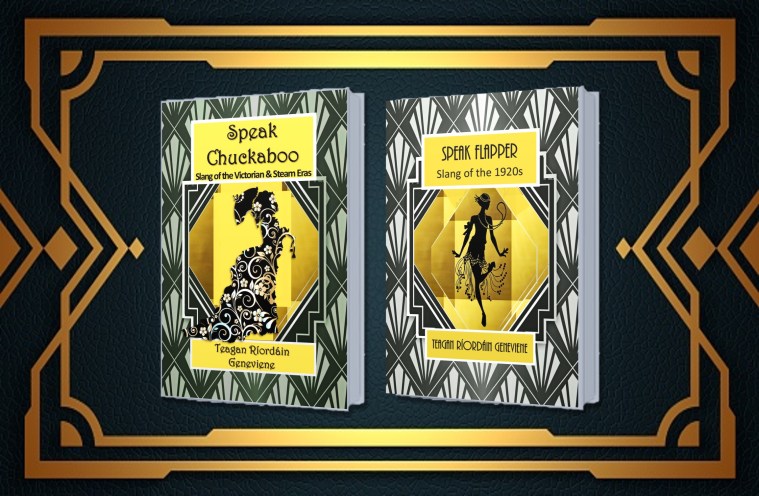
 Teagan's Books
The women used as computers are a fascinating bit of history. There is even a movie called “Hidden Figures”. It is good.
LikeLiked by 1 person
Thanks for the recommendation, Lavinia. I’ll look for it. Thanks for spending time here today. Big hugs.
LikeLiked by 1 person
This fascinating bit of computer history is brand-new to me! I wonder why there is still the stereotyping of girls as not being good at math.
LikeLiked by 1 person
Ya know! Have a good weekend. 🙂
LikeLiked by 1 person
You, too, Teagan!
LikeLiked by 1 person
Good story, Teri. I got to meet one of these “Women Computers” and like a dunce, I was too stupid to take advantage of the moment. Read about it here: https://wordpress.com/post/williamablan.wordpress.com/3396
LikeLiked by 1 person
I’m glad you enjoyed the post, William. Thanks for visiting. Teagan.
LikeLike
This is fascinating, Teagan! Because they’re women, it’s not surprising they were overlooked in history.
LikeLiked by 1 person
Ain’t that the truth, Teri. The thing I find most annoying is how dismissively women inventors (and others, like this group) were treated. I’ve been in that spot too many times myself, and it infuriates me. Thanks for spending time here. Hugs.
LikeLiked by 1 person
Hooray for the computer women!
LikeLiked by 1 person
Yes indeed, Jennie. Hugs!
LikeLiked by 1 person
😍
LikeLiked by 1 person
Cheers to your post, computers and woman and I couldn’t agree with you more Teanan! Great take aways here!! ❣️
LikeLiked by 1 person
Thank you.
LikeLiked by 1 person
❤️❤️
LikeLiked by 1 person
HI Teagan, this is such a great idea for stories. I do enjoy stories based on historical facts and events as you know.
LikeLiked by 1 person
Robbie, I can imagine the wheels turning in your head as you consider the potential lives of those women. 🙂 I know that your plate already “overfloweth” but if you start something from it, I hope you’ll let me know. I hope all is well in your world. Big hugs.
LikeLike
Thanks for the interesting history Teagan. At least the work was challenging, even if it wasn’t well paid. (K)
LikeLiked by 1 person
Now I’m also looking forward to the Daddy-o book — I was born in 1950, so I expect I’ll meet some old friends in those pages. lol Cool, man, I dig it the most!
LikeLiked by 1 person
Haha! It’s fun slang, Marian. I got a kick out of making examples to use the words in sentences. It was coming along nicely, but when I decided to go forward with the 2015 Cornelis Drebbel steampunk story, I temporarily shelved the 1950s slang, so the Stempunkery Tech book would come out near the steampunk story. Thank for your encouragement. Big hugs to you and the kitties.
LikeLiked by 1 person
Teagan, look forward to your new books! Women need to be recognized for their talents. And you are one of them in a writing career. Wonder if any of the women computers had supportive husbands? Or were most single and focused on brain work. I know we’ll get answers with your creative mind at work, with psycology in the details. 📚🎶 Christine
LikeLiked by 1 person
You are too kind, Christine. I blush. I’m sure some of the human computers had husbands who were supportive — provided they brought home money and kept the house clean and put 3 meals and snacks on the table, etc…. (Eye roll)
“Real Steampunkery Tech: True Contraptions of the Steam and Diesel Eras” is only an overview with summary descriptions. It doesn’t delve very far into the contraptions or inventors. Many thanks for visiting. Hugs.
LikeLike
Whatever you write will be compelling! I love historical details too. 📚🎶
LikeLiked by 1 person
I never knew about human computers! And that they would be female is a given! 😉
Reminds me of the women decoding messages during WWII, both here in the States and in England.
LikeLiked by 1 person
Haha. Indeed it should, Noelle. I imagine that the structure and details of their work could have been similar to those required in code breaking. I had not thought of that. Thanks for reading and commenting. Hugs.
LikeLiked by 1 person
This was a fabulous post, Teagan. So many women have been overlooked by history! Thanks for drawing attention to these forgotten souls.
LikeLiked by 1 person
I appreciate your supportive comment, Colleen. I’ve been surprised at the scope of it — and that’s just with me accidentally stumbling upon it, not a “mission” to dig it up. I didn’t try to put all of them in my Steampunkery book, but I did manage to add several of them. Hugs.
LikeLike
A terrific topic and subject that not too many folks know about. Thanks for the view, Teagan.
LikeLiked by 1 person
Thanks for your great feedback, John. I’m pleased to know that readers find it as unexpected and interesting as I did. Big hugs.
LikeLiked by 1 person
Hugs back. You have excellent taste in what’s unexpected and interesting.
LikeLiked by 1 person
Your post reminded of the women of Bletchley Park as well who worked tirelessly to break the Enigma Machine code during WWII.
You’ve hit a few groups I knew nothing about! Thanks for teaching me something new today.
I hope your week is going well. 🤗
LikeLiked by 1 person
Hi Deborah. The Bletchley Park miniseries was so intense. It was brilliant. My intention is to mostly use the unfamiliar ones. I’m glad you enjoyed this. It’s a rough week, but that’s just because I’m me. I don’t have the flu, and my house is not getting flooded. 🙂 Wishing you an easy coast down the other side of this midweek hump. Hugs.
LikeLiked by 1 person
That series was really good! I hope your week gets better! Hugs.
LikeLiked by 1 person
Excellent post, Teagan. It’s too bad more women weren’t involved with the development of computer programming. Years ago, when Laurie was working with computers, a woman who worked with her and couldn’t make sense of the programming said, “This must have been designed by a man!”
LikeLiked by 1 person
Haha! I’ve heard that statement quite a few times myself, Tim. I’m happy you enjoyed this. I hope to do a few more about unknown (or little known) women inventors. Hugs to you and Lauire — and the kitties.
LikeLiked by 1 person
Fascinating info. It’s not surprising that computers were women initially. Thanks for bringing this to light.
LikeLiked by 1 person
Hi, Darlene. I’m happy you enjoyed it. Wishing you an easy coast down the other side of this midweek hump. Hugs.
LikeLiked by 1 person
A great post, Teagan. Despite the movie, etc. many people still never heard of these women.
LikeLiked by 1 person
Thanks, GP. I don’t know the movie, but Sharukh also mentioned it. Unless you mean the Bletchley Circle series from BBC. I enjoyed that a lot. It would probably be too intense for me these days, but it’s a fantastic historical show. Hugs.
LikeLiked by 2 people
The movie was called, ” Hidden Figures”.
LikeLiked by 1 person
This is a wonderful post, Teagan. It’s long been a subject of interest of mine, both the human computer aspect and the number of women that were involved in that history. The list of accomplishments that relied on these women and their manual/mental efforts is as long as it is important. I am looking forward to your upcoming book, and the one after that. I hope you’re having a good week.
LikeLiked by 1 person
Thanks very much, Dan (and many thanks for sharing on social media). I barely grazed the highpoints here. What a great research project it would be.
It’s a very rough week, but that’s just because I’m me — not because of anything that’s actually horrible for a normal person. Thanks for thinking about me. Wishing you an easy coast down the other side of this midweek hump. Hugs.
LikeLiked by 1 person
Great history, Teagan. Shared on Twitter for you.
Best wishes, Pete. x
LikeLiked by 1 person
Thanks for sharing, Pete — I really appreciate that. It’s good to see you.
I only grazed the highpoints here, but what a fabulous research project it would be to feature at least half a dozen of the women on that team.
I hope to do several more posts on little-known women inventors. Hugs.
LikeLiked by 1 person
This was a fascinating post. Yes, women have always been at the forefront but are often overshadowed by their male counterparts. I did my major in Sociology and “Women and Society” was one of my papers in which I scored highly. Often people ask Sarah what does she do? and when she replies that she is a housewife. We often get a response like – Oh! so you don’t work? This mentality is so absurd even from the ladies. Why do men/women think being a housewife is sitting at home? I have at times replied to such people – So, you think your mother never worked a day in her life? You’re what a cacti or something? Standing out in the sun, growing in the dirt even if no water is poured on you? Being a housewife is more work than men can ever imagine. I see Sarah work for hours as I work on my content. As a housewife a woman never gets paid, she works the whole day and sometimes never even gets a word of appreciation, let alone monetary gains. And when I take Sarah’s side I end up making an impression on their (my friends) wives. Then they say to me, Oh you’re quite a charmer. You know how to play with words. and I’m like – Really? (F disgusting) However, coming to this post, I loved it. I think there is also a movie called Hidden Figures on the topic you mentioned, am I right?
LikeLiked by 2 people
Hi, Sharukh. Your “cacti” remark made me laugh. That’s perfect. I’m happy that you stand up for Sarah. Earlier I toyed with the idea of starting an additional blog (one that would not have comments enabled) as something like Diaries of a Childless Cat Lady. Just to vent frustrations of a similar nature. But I need to focus on my books. I don’t think I can allow myself that luxury.
I’m sure you’re right about the movie — I don’t recall it, but the name sounds familiar. I don’t watch many movies. Have a great rest of the week. Hugs.
LikeLiked by 1 person
My cacti remark is very caustic and I have seem some weird facial reactions the momen I blurt it. However, those who ‘know me’ are aware of the fact that I use such uncanny terms when debating on certain issues. Initially, when I used to debate on FB, I used such terms and all I got in return was personal attacks and abuse. The other person felt humiliated and all he could do is curse. So, when I used to exit I use to tell them that I’m not angry about the cursing, but happy instead that I left them speechless.
LikeLiked by 1 person
Haha! Being able to leave that type of people speechless is a rare talent. 😀
LikeLiked by 1 person
Yeah, I love fiddling with their egos.
LikeLiked by 1 person
It is a fascinating topic and it’s about time the women behind these projects get some recognition. They must never be forgotten. Thanks, Tegan, and we look forward to your new books!
LikeLiked by 1 person
Thanks for your kind words, Olga. I hope your week is going well. Big hugs.
LikeLike
Wow, I’m in love with this. How very fascinating! I love history about wonderful women. I’m kind of reminded of 1920 telephone operators, 40s engineers/builders during WWII, and the secretaries of the 1950s, and I’m here for it. We women have always had our hand in things. Even during the nomadic eras. Hunters weren’t what kept tribes alive. It was women! We were the cooks, cleaners, builders, and gatherers, and we ones who designed all the important tools that progressed us. We were the designers. What kept everyone alive while the men literally just brought back a little meat. We started agriculture, created tools that grew tribes, designed the wheel etc. Started trade and agriculture. We did it all from the beggining. 😄😁
LikeLiked by 1 person
Thanks very much, Samantha. I’m happy this resonated with you. I hope to do several more posts on little-known women inventors. (Well, this group weren’t exactly inventors, but the future posts will be.) The infuriating thing about some of the jobs you mentioned is how when women started doing the jobs, the pay and prestige both plummeted. Everything in recent centuries that began as an educated or technical job began as male dominated. When women started getting those jobs (usually because a war started), down it went. Telephone operators were men. So were secretaries, school teachers. I saw the same happening in technical writing when women like me started breaking into that field. As women were allowed to have those jobs, not only did the pay drop drastically, the work came to be seen as little more than “note taking” and all sorts of minor admin tasks were repeatedly dumped on us. Anyhow, many thanks for reading and commenting.
LikeLiked by 1 person
You make some excellent points. Very well said!
LikeLiked by 1 person
I loved learning about these human computers.
LikeLiked by 1 person
It’s good to see you, Mandy. I’m happy you enjoyed this post. Wishing you an easy coast down the other side of this midweek hump. Hugs.
LikeLiked by 1 person